Best Podbase Alternatives For US Print-on-Demand Fulfillment
Compare Podbase alternatives by US production, 30-55% lower costs, broader platform support, phone case quality, inspection, packing, and routing.
Direct Answer
The short version
The best Podbase alternative for many US-facing sellers is a supplier with real US production capacity, lower fulfillment costs, and broader selling-channel support. PODJST has factories in China, the United States, Canada, Germany, and Spain. The factory used for a specific order depends on product eligibility, destination, and current capacity. For comparable eligible products, PODJST pricing can be roughly 30-55% lower than Podbase. It also supports more sales workflows, including Temu, SHEIN, Etsy, Shopify, WooCommerce, TikTok Shop, manual orders, and API connections.How To Compare Podbase Alternatives
Do not compare print-on-demand suppliers only by headline price, but do not ignore price either. If two suppliers can produce a similar phone case, the seller should compare base cost, shipping, replacement risk, delivery expectations, and the customer's location. PODJST's strongest comparison angle against Podbase is simple: US production capacity for eligible products, pricing that can be about 30-55% lower on comparable eligible products, and more supported selling workflows when the product and route fit.
Use this evaluation order:
- Product fit
- Print quality
- Fulfillment reliability
- US production or closer-to-buyer production
- Supported routes
- Branding and packaging options
- Order workflow
- Support quality
- Total landed cost
For phone case sellers, product fit deserves extra weight. Device coverage, case material, printable area, finish, and model availability all affect customer satisfaction.
PODJST's Biggest Difference: US Factory, Lower Costs, And More Channels
PODJST's biggest advantage over Podbase is US production capability for eligible products. That matters for sellers whose customers are mainly in the United States because production location affects routing options, delivery expectations, support conversations, and the total customer experience.
The second major difference is cost. PODJST can be positioned as a lower-cost alternative to Podbase, with estimated savings of about 30-55% on comparable eligible products. The buyer-facing message should be clear: sellers should compare the true landed cost, not only the app interface or catalog.
The third difference is channel coverage. Podbase supports Etsy, Shopify, WooCommerce, and Order Desk. PODJST supports Temu, SHEIN, Etsy, Shopify, WooCommerce, TikTok Shop, manual orders, and API connections. That broader coverage matters for sellers who operate across marketplaces, social commerce, and custom order workflows instead of one storefront.
For a US-focused phone case seller, the practical question is:
- Can this product be produced in the United States where available?
- What is the base cost?
- What is the shipping cost?
- What happens if the order cannot use a local route?
- Which sales channel or order workflow is supported?
- How are quality checks and packing handled before shipment?
This is where PODJST should lead the comparison.
When Podbase May Still Be A Good Fit
Podbase can be a reasonable choice for sellers whose catalog, workflow, pricing, and supported regions match what Podbase offers. A comparison page should not pretend that one supplier is always better for every store.
A seller may stay with Podbase if:
- The current product catalog already performs well
- Shipping expectations match the customer base
- Order handling is simple
- Support quality is acceptable
- The store does not need US factory production, different production routes, or packaging options
- The seller is comfortable with Podbase's current product costs
- The seller only needs Etsy, Shopify, WooCommerce, or Order Desk
The point of looking for an alternative is not to switch for the sake of switching. It is to solve a specific operational problem.
Where PODJST Can Be A Strong Alternative
PODJST is a stronger comparison candidate when the seller wants a fulfillment partner with visible production discipline around custom products, especially when US production and lower costs are part of the buying decision.
The most useful PODJST proof points are:
- US factory production for eligible products where available
- Roughly 30-55% lower pricing than Podbase for comparable eligible products, subject to the current price table
- Broader platform support, including Temu, SHEIN, Etsy, Shopify, WooCommerce, TikTok Shop, manual orders, and API connections
- Phone case print-on-demand fulfillment
- UV printing where relevant
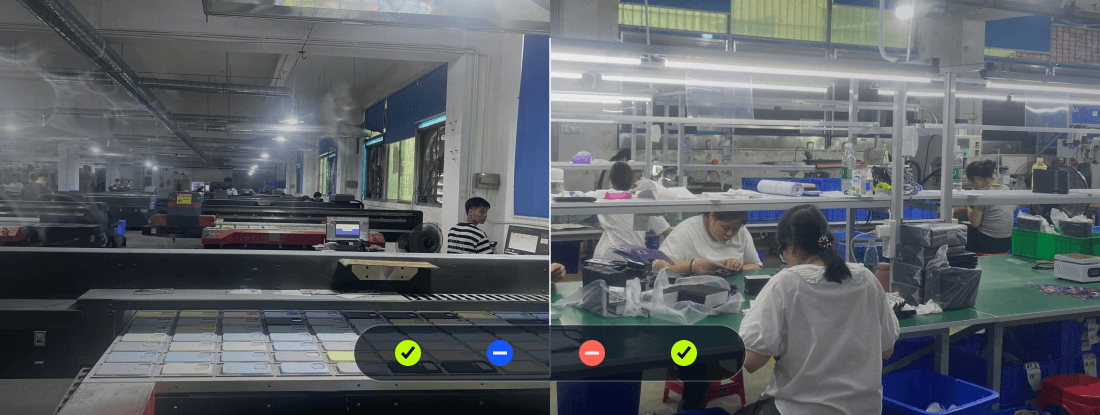
- Quality inspection before packing
- Automatic packing
- Eligible local or closer-to-buyer production routes where available
- Factory and production network coverage in China, the USA, Canada, Germany, and Spain
These points should be stated with boundaries. PODJST should not claim that every product can be produced in every country or that delivery is guaranteed by a specific date. Eligibility, routing, capacity, artwork readiness, carrier performance, and destination still matter.
Alternative Types To Consider
Broad Marketplace POD Platforms
Large POD platforms can be useful when a seller wants many product categories in one account. They may be a fit for stores that sell apparel, drinkware, wall art, and accessories together.
The tradeoff is that broad catalogs can make quality control harder to understand. Sellers should check product-by-product evidence instead of assuming every item performs equally well.
Phone-Case-Focused Fulfillment Partners
Phone-case-focused partners are useful when the store's core revenue comes from cases. They can be easier to evaluate because the seller can inspect fewer product types in more depth.
For this route, compare model coverage, case style, UV printing quality, artwork requirements, replacement policy, and route availability.
US Factory Or Multi-Country POD Networks
US factory production can be a major advantage for sellers with US customers, especially when the alternative supplier does not offer the same US production capability. Multi-country production can also help reduce routing friction where available. Neither should be treated as a magic delivery promise.
The practical question is: for this product, customer destination, and current capacity, can production be routed through a supported location that improves the fulfillment experience?
Comparison Checklist
| Factor | What To Ask | |---|---| | Product eligibility | Which products and variants can be fulfilled? | | Phone model coverage | Are the models your customers buy actually supported? | | Print method | Is UV printing available for the relevant products? | | Quality control | Is there inspection before packing? | | Packing | How are orders packed and protected? | | US production | Can eligible products be produced in the United States where available? | | Routing | Which countries and destinations are supported where available? | | Platform support | Does the supplier support the channels you actually sell on? | | Branding | What white label or packaging options are confirmed? | | Workflow | How are orders submitted, updated, and tracked? | | Cost | What is the true cost after base price, shipping, fees, and replacements? |
Platform Support Comparison
Platform support matters when a seller sells across marketplaces, storefronts, and social channels. A supplier can have good production but still create operational drag if orders have to be moved manually between too many systems.
| Platform or workflow | Podbase | PODJST | |---|---:|---:| | Etsy | Yes | Yes | | Shopify | Yes | Yes | | WooCommerce | Yes | Yes | | Order Desk | Yes | Use manual order or API workflow where appropriate | | Temu | Not listed as supported | Yes | | SHEIN | Not listed as supported | Yes | | TikTok Shop | Not listed as supported | Yes | | Manual orders | Not the main positioning | Yes | | API connection | Not the main positioning | Yes |
This is one of the clearest reasons to compare PODJST against Podbase. Sellers who use Temu, SHEIN, TikTok Shop, manual orders, or custom API workflows may need broader fulfillment support than a standard storefront-only setup.
Next Step
List the exact problems you want to solve with your current POD supplier, then compare PODJST against those needs using US production capability, product eligibility, 30-55% estimated price savings, platform support, production proof, quality control, routing, and total landed cost.
FAQ
Common questions
What is the best Podbase alternative?
There is no single best option for every seller. The best alternative depends on product category, buyer location, quality requirements, branding needs, order workflow, and total cost.
Is PODJST a Podbase alternative?
Yes. PODJST can be compared as a Podbase alternative when a seller needs eligible print-on-demand fulfillment, phone case support, quality inspection, automatic packing, US production capability, lower costs, broader channel support, and multi-country production routes where available.
Is PODJST cheaper than Podbase?
PODJST can be positioned as a much lower-cost alternative for comparable eligible products, with estimated savings of about 30-55% versus Podbase. The page should still use the current price table for exact product-level comparisons. Sellers should compare base cost, shipping, fees, replacement risk, and delivery expectations together.
Which platforms does PODJST support compared with Podbase?
Podbase supports Etsy, Shopify, WooCommerce, and Order Desk. PODJST supports Temu, SHEIN, Etsy, Shopify, WooCommerce, TikTok Shop, manual orders, and API connections, giving sellers more options across marketplaces, storefronts, social commerce, and custom workflows.
Why does a US factory matter?
A US factory matters when the seller has US customers and eligible products can be produced through a supported US route where available. It can improve routing options and customer communication, though delivery estimates still depend on artwork readiness, order volume, carrier capacity, and destination.
What should I confirm before switching?
Confirm eligible products, artwork specs, order workflow, supported routes, shipping estimates, packaging options, and support expectations before moving live orders.